

In an increasingly crowded and competitive landscape, effective marketing is no longer just about creativity or reach, it’s about relevance. And relevance starts with understanding your audience.
The most successful campaigns are rooted in a deep understanding of the people they are trying to reach: their behaviours, needs, motivations and, crucially, how they see themselves. Without this insight, even the most high-profile campaigns risk missing the mark, not because they lack creativity, but because they lack connection.
When brands fail to put their audience first, the consequences can be immediate. Campaigns can feel tone-deaf, misaligned or, in some cases, actively alienating to the very people they are meant to engage.
A recent campaign from Nike provides a clear example of how this can happen.
When insight is missed: Nike and the Boston marathon campaign
Ahead of the 2026 Boston Marathon, Nike launched an out-of-home campaign featuring the following line (see image below):
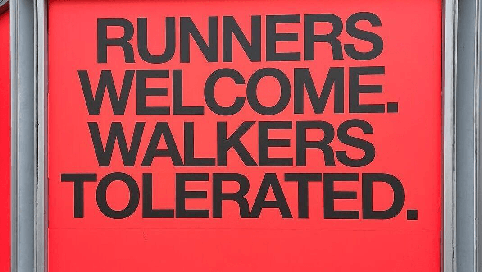
Positioned at one of the most prestigious and demanding races in the world, the message was clearly intended to be bold, provocative and performance led. However, the reaction revealed a disconnect between intent and audience perception.
The vast majority of responses centred on a perceived lack of inclusivity. Many within the running community felt the message created an unnecessary divide, positioning “runners” and “walkers” as separate, unequal groups. For a sport widely seen as personal and inclusive, this struck a nerve. Runners highlighted that walking is often part of training, recovery and even race-day strategy, particularly over marathon distances.
Others pointed out that the campaign appeared to contradict Nike’s long-standing brand ethos, one built on accessibility and empowerment. The iconic “Just Do It” platform has historically encouraged participation at all levels, reinforcing the idea that “if you have a body, you are an athlete.” In contrast, this message was seen by some as introducing a sense of hierarchy and exclusion.
Ultimately, the dominant criticism was that Nike had misread its audience, overlooking the values of inclusivity, personal achievement and community that define running culture.
While the negative reactions outweighed the positive, there was also a clear counterpoint. Supporters of the campaign argued that the message was intentionally provocative, designed to inspire, challenge and reinforce Nike’s performance credentials. For them, the campaign reflected the competitive spirit of the Boston Marathon, an event known for its strict qualification standards and elite status.
Some saw the line as motivational rather than exclusionary: a call to push harder, aim higher and embrace the mindset of a runner. Others noted that not all marketing needs to appeal to everyone, and that creating a strong point of view can be an effective way to build brand distinction.
The takeaway: Misalignment of audience and message
Despite differing perspectives, the outcome is telling. Nike has removed the controversial advert seen in Boston ahead of Monday’s marathon in the city, suggesting that the negative response carried significant weight.
At its core, the issue was not simply the wording of the message, but the gap between brand intent and audience perception. The campaign leaned into performance and provocation, while much of its audience values inclusivity and personal progress.
It highlights a fundamental truth in marketing: attention alone is not a strategy. Without a clear understanding of your audience, even well-intentioned campaigns can create friction instead of connection.
A closer relationship with the audience, through listening, testing and insight, could have helped identify this tension before the campaign went live.
How Mobas helps brands stay audience-first
At Mobas, we believe the most effective marketing starts by bringing organisations closer to their audiences. Being audience-first is not just a principle, it’s a process. One that ensures ideas are shaped, tested and refined with real people, not just internal perspectives.
We help our clients avoid costly missteps by embedding audience insight at every stage of decision-making through a range of tools, including:
- Audience testing for better decisions. Better decisions come from better evidence. Audience testing shows how real people respond to ideas, messages and creative before significant investment is made.
- Co-creation research that engages and inspires. The strongest ideas are rarely created in isolation. Co-creation research brings customers, users and stakeholders into the process, ensuring ideas are grounded in real needs and lived experience.
- Market research that reveals opportunities. Every organisation operates with some level of uncertainty. Market research reduces that uncertainty by providing a clear understanding of customer behaviour, market dynamics and growth opportunities. Without robust insight, brands risk misreading their audience or investing in the wrong areas.
Together, these three tools enable our clients to move from assumption to understanding, and from risk to confidence. They help organisations validate ideas before they go live, ensuring messaging resonates rather than alienates. They enable brands to build campaigns with their audiences, not just for them, grounding creativity in real behaviours, needs and motivations. And they provide the strategic clarity needed to position brands effectively, based on evidence rather than instinct.
The result is more than just avoiding mistakes. It’s about creating work that connects, performs and delivers measurable impact.
Looking back at the Nike Boston Marathon campaign, the challenge wasn’t a lack of boldness, it was a lack of alignment. Audience testing could have quickly surfaced the polarising nature of the message. Co-creation could have helped shape a more inclusive expression of performance that reflected how runners actually see themselves. Market research could have reinforced the importance of community and personal achievement within running culture.
In combination, these tools would have reduced the risk of backlash and ensured the campaign landed in a way that inspired rather than divided.
Bringing it all together
The Nike Boston Marathon campaign is a powerful reminder that even the world’s most established brands can misjudge their audience.
In a world where consumers are quick to respond and expectations are higher than ever, being audience-first is not optional, it’s essential.
At Mobas, we help organisations close the gap between intention and impact. By listening to audiences, testing ideas and building insight into every stage of the process, we ensure campaigns don’t just get attention, they resonate.
To find out more about how Mobas tools could help your organisation to better understand your customers, please click on the following link and get in contact with us https://www.mobas.com/contact-us